
For over two decades, online search has revolved around one name: Google.
For most internet users, searching the web and “Googling” became interchangeable. Businesses optimized for Google. Marketers built entire strategies around Google’s algorithm. SEO professionals tracked Google rankings obsessively.
But here’s the reality that many brands are only now starting to recognize:
Search is no longer a one-engine ecosystem.
Google maintains its status as the top search engine worldwide yet other search engines are experiencing steady growth across all their operational categories.
The search engine world now treats AI-driven search technologies, privacy-focused search platforms, regional search engine operators and specialized search engines as valid search engine categories.
The search landscape is fragmenting. And for marketers, agencies, and businesses, understanding that fragmentation is no longer optional.
It’s strategic.
Why Users Are Moving Beyond Google
The shift away from relying solely on Google isn’t happening randomly. It’s driven by clear behavioral changes.
Users today want:
- Faster answers
- Conversational responses
- Less advertising clutter
- Greater privacy protection
- Specialized discovery tools
- Reduced tracking
Google remains powerful, but its model is still largely built around advertising and traditional ranking systems.
Alternative search engines are capitalizing on gaps in that experience.
And that’s where opportunity begins.
Category 1: AI-Powered Search Engines
The biggest disruption in modern search is artificial intelligence.
AI-powered search engines provide structured answers and content summaries which include multiple source citations as their primary output instead of displaying ten blue links.
This fundamentally changes user behavior.
Rather than clicking multiple websites, users receive synthesized information instantly.
ChatGPT-Style Search Interfaces
AI conversational search allows users to:
- Ask multi-layered questions
- Receive context-aware responses
- Refine queries dynamically
- Explore topics without restarting searches
For content creators and marketers, this means:
Ranking is no longer the only visibility metric.
Now, being cited within AI-generated answers is becoming just as important.
This introduces a new dimension of search optimization — content must be structured, authoritative, and extractable.
Perplexity & AI-with-Citations Models
Some AI search engines focus on transparency by including visible source citations within responses.
This model builds trust because users can verify information immediately.
For publishers, this creates a new challenge:
Content must not only rank — it must be clear enough to be quoted.
High-quality definitions, short explanations, and well-documented sections contribute to a greater citation factor.
Google AI + Traditional Search Platforms
Some engines blend AI summaries with traditional ranking lists.
This hybrid approach suggests that search may not split into “AI vs traditional” — but rather evolve into layered experiences.
That means SEO fundamentals remain important.
AI doesn’t replace indexing infrastructure.
It reorganizes it.
Category 2: Privacy-First Search Engines
One of the strongest drivers behind alternative search growth is privacy.
Many users are increasingly uncomfortable with:
- Behavioral tracking
- Personalized ad profiling
- Search history retention
- Cross-platform data usage
Privacy-first search engines respond to this demand.
DuckDuckGo has built its brand entirely around privacy.
It does not store personal search history or track user behavior for advertising purposes.
Its appeal lies in simplicity and anonymity.
For marketers, this changes targeting assumptions — personalization is minimal, so content must match broader intent rather than user history.
Startpage offers an interesting hybrid.
It delivers results similar to Google’s index — but removes tracking mechanisms.
Users get familiar results without direct profiling.
This shows that demand for quality search and privacy are not mutually exclusive.
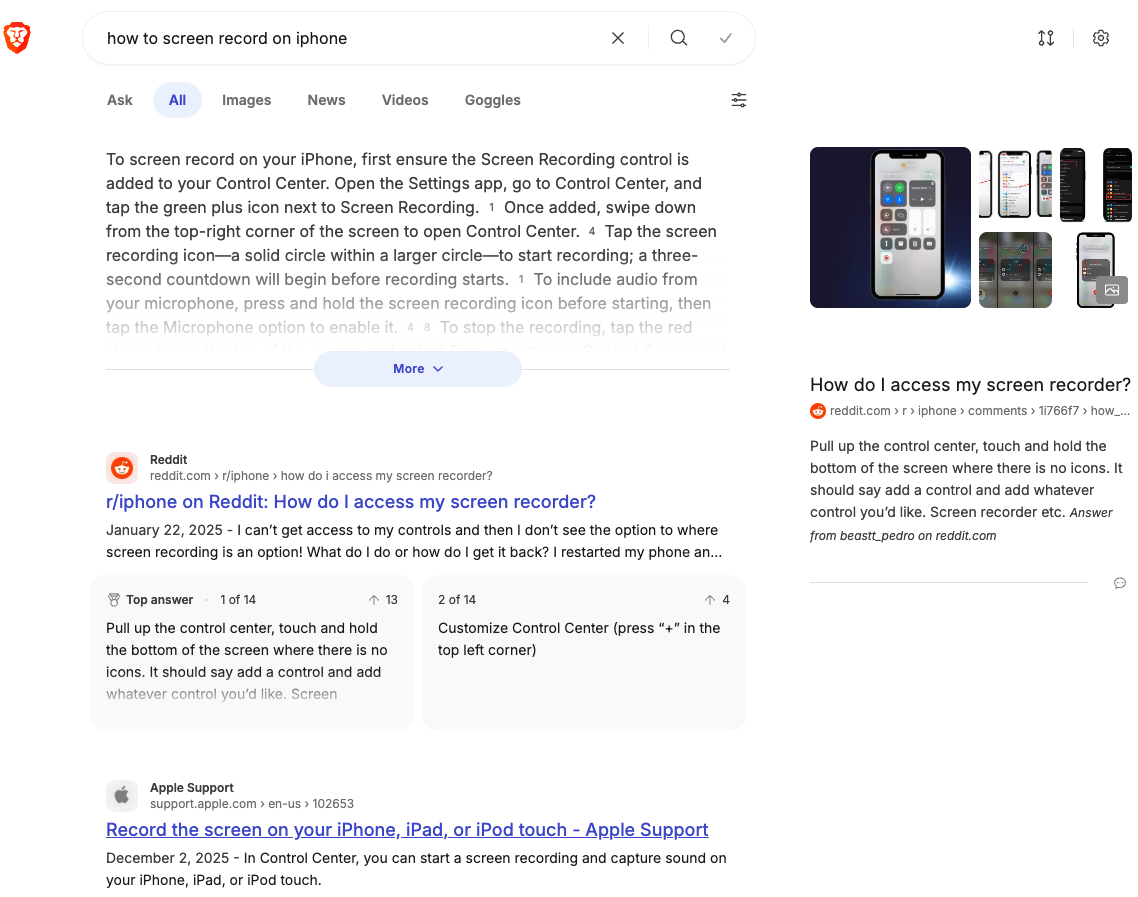
Brave Search emphasizes independent indexing and privacy-first architecture.
It positions itself as less dependent on major search infrastructures.
For businesses, this means search diversification isn’t just theoretical — alternative indexing systems are emerging.
Category 3: Established Competitors to Google
While Google dominates globally, it does not dominate everywhere.
Several mainstream engines retain substantial market share either globally or regionally.
Bing continues to be an important competitor for Microsoft especially in the Windows operating system market.
Bing has increased its importance through its enterprise software integrations and its AI-powered functionality enhancements.
SEO professionals who neglect Bing will miss out on tracking potential website visitors.
Though powered by external search infrastructure, Yahoo maintains brand familiarity and user loyalty.
For certain demographics, it remains a primary search portal.
In China, Baidu is the dominant search engine.
Global brands targeting Chinese audiences cannot rely on Google alone.
Search optimization strategies must localize.
Yandex serves Russia and nearby regions with its own algorithmic ecosystem.
Understanding regional search engines is essential for international expansion.
Naver provides South Korean users with a search service which delivers results from blogs, forums and user-generated content through its carefully managed search results.
The study shows that different areas of the world demonstrate distinct patterns of search experience.
Global search engine optimization does not work as a universal solution for all situations.
Category 4: Creator-Centric and Alternative Revenue Models
Some emerging search engines attempt to address another criticism of dominant platforms — revenue concentration.
Instead of centralizing advertising revenue, some alternative platforms aim to share earnings with content creators.
This approach challenges the traditional search monetization structure.
While still emerging, it signals that search innovation is not just technological — it’s economic.
Category 5: Specialized Search Engines
Not every search engine aims to compete broadly.
Some focus on specific content categories.
Openverse specializes in openly licensed images and media.
The platform provides copyright-free content which content creators, marketers and designers can use without facing copyright challenges.
The service provides computational solutions instead of displaying standard web content through its indexing process.
The system performs best when it handles structured data queries, mathematical questions and technical content. The different meanings of the word “search” depend on what users want to find.
The Strategic Shift: Search Is Fragmenting
Here’s the deeper takeaway:
Search is no longer centralized.
It is fragmenting across:
- AI engines
- Privacy-first platforms
- Regional ecosystems
- Specialized content tools
Google remains dominant, but dominance does not equal exclusivity.
User behavior is becoming situational.
Someone may:
- Use Google for product research
- Use AI chat for summaries
- Use DuckDuckGo for private browsing
- Use regional engines for localized content
Search loyalty is weakening.
Intent is driving platform choice.
What This Means for SEO & Digital Marketing
For agencies and brands, this evolution changes strategy in several ways.
1. Diversification Reduces Risk
The brands which depend entirely on Google face dangers through changes to Google algorithms.
The businesses that increase their online presence through different search platforms will achieve better protection against any potential risks.
2. Authority Matters Across Platforms
AI search engines and alternative search platforms depend on content which shows proper structure and obtains authoritative status.
The basic principles of search engine optimization (SEO) enable businesses to gain advantages in multiple online platforms.
3. Structure Is Increasingly Important
AI-driven engines prioritize clarity.
Content must be:
- Structured
- Concise
- Data-backed
- Easy to extract
Formatting is no longer just about readability — it influences visibility.
4. Regional Strategy Is Critical
If targeting international markets, optimizing for Baidu, Yandex, or Naver may be essential.
Google-only strategies limit reach.
The Big Picture: Search Is Becoming Plural
We are entering what could be called a plural search era.
Google still leads.
But alternative engines are growing in influence.
AI is reshaping discovery.
Privacy is reshaping trust.
Regional engines are reshaping localization.
Specialized platforms are reshaping niche exploration.
This is not a collapse of Google.
It is an expansion of the ecosystem.
Final Thoughts
The rise of alternative search engines does not signal the end of Google’s dominance.
But it does signal the end of Google exclusivity.
Search behavior is diversifying.
Visibility is becoming multi-dimensional.
The brands and agencies that understand this shift early will position themselves advantageously across platforms — not just within one algorithm.
Search is no longer a single gatekeeper.
It’s an interconnected network of discovery systems.
And those who adapt to that network will define the next era of digital visibility.